
Books



Reproductive Rights Package-- Three New Books of Note
- Item Number
- 213
- Estimated Value
- 80 USD
- Sold
- 45 USD to DebraLG
- Number of Bids
- 2 - Bid History
Item Description
The Birth of the Pill: How Four Crusaders Reinvented Sex and Launched a Revolution, by Jonathan Eig.
The fascinating story of one of the most important scientific discoveries of the twentieth century.
We know it simply as "the pill," yet its genesis was anything but simple. Jonathan Eig's masterful narrative revolves around four principal characters: the fiery feminist Margaret Sanger, who was a champion of birth control in her campaign for the rights of women but neglected her own children in pursuit of free love; the beautiful Katharine McCormick, who owed her fortune to her wealthy husband, the son of the founder of International Harvester and a schizophrenic; the visionary scientist Gregory Pincus, who was dismissed by Harvard in the 1930s as a result of his experimentation with in vitrofertilization but who, after he was approached by Sanger and McCormick, grew obsessed with the idea of inventing a drug that could stop ovulation; and the telegenic John Rock, a Catholic doctor from Boston who battled his own church to become an enormously effective advocate in the effort to win public approval for the drug that would be marketed by Searle as Enovid.
Spanning the years from Sanger’s heady Greenwich Village days in the early twentieth century to trial tests in Puerto Rico in the 1950s to the cusp of the sexual revolution in the 1960s, this is a grand story of radical feminist politics, scientific ingenuity, establishment opposition, and, ultimately, a sea change in social attitudes. Brilliantly researched and briskly written, The Birth of the Pill is gripping social, cultural, and scientific history.
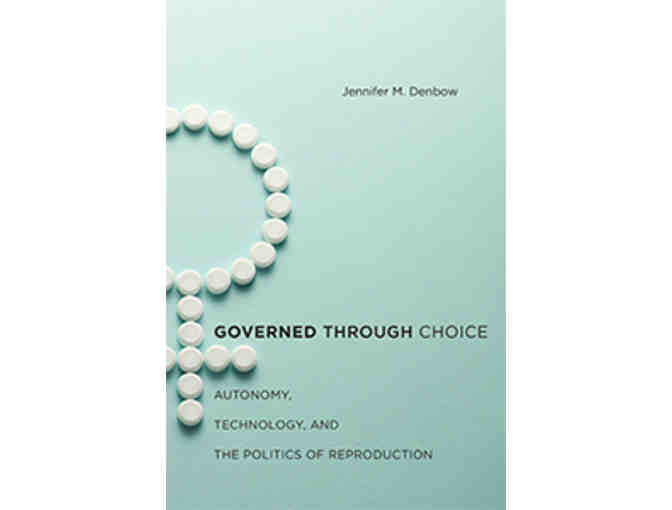
Governed Through Choice: Autonomy, Technology, and the Politics of Reproduction, by Jennifer M. Denbow.
Reconceiving Infertility: Bibilical Perspectives on Procreation and Childlessness, by Candida R. Moss and Joel S. Baden.
In the Book of Genesis, the first words God speaks to humanity are "Be fruitful and multiply." From ancient times to today, these words have been understood as a divine command to procreate. Fertility is viewed as a sign of blessedness and moral uprightness, while infertility is associated with sin and moral failing. Reconceiving Infertility explores traditional interpretations such as these, providing a more complete picture of how procreation and childlessness are depicted in the Bible.
Closely examining texts and themes from both the Hebrew Bible and the New Testament, Candida Moss and Joel Baden offer vital new perspectives on infertility and the social experiences of the infertile in the biblical tradition. They begin with perhaps the most famous stories of infertility in the Bible—those of the matriarchs Sarah, Rebekah, and Rachel—and show how the divine injunction in Genesis is both a blessing and a curse. Moss and Baden go on to discuss the metaphorical treatments of Israel as a "barren mother," the conception of Jesus, Paul’s writings on family and reproduction, and more. They reveal how biblical views on procreation and infertility, and the ancient contexts from which they emerged, were more diverse than we think.
Reconceiving Infertility demonstrates that the Bible speaks in many voices about infertility, and lays a biblical foundation for a more supportive religious environment for those suffering from infertility today.
Item Special Note
A $7.50 charge will be added for shipping and handling to any USA address. Inquire about shipping outside the USA.
Lilith Magazine stores data...
Your support matters, so Lilith Magazine would like to use your information to keep in touch about things that may matter to you. If you choose to hear from Lilith Magazine, we may contact you in the future about our ongoing efforts.
Your privacy is important to us, so Lilith Magazine will keep your personal data secure and Lilith Magazine will not use it for marketing communications which you have not agreed to receive. At any time, you may withdraw consent by emailing Privacy@frontstream.com or by contacting our Privacy Officer. Please see our Privacy Policy found here PrivacyPolicy.