
Fund a Need

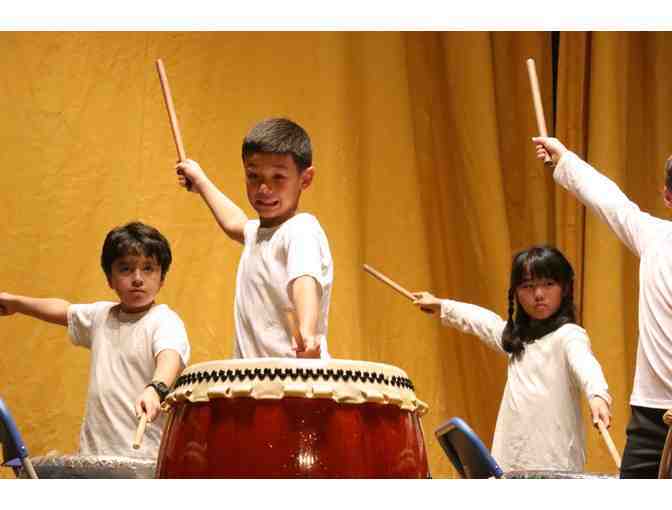
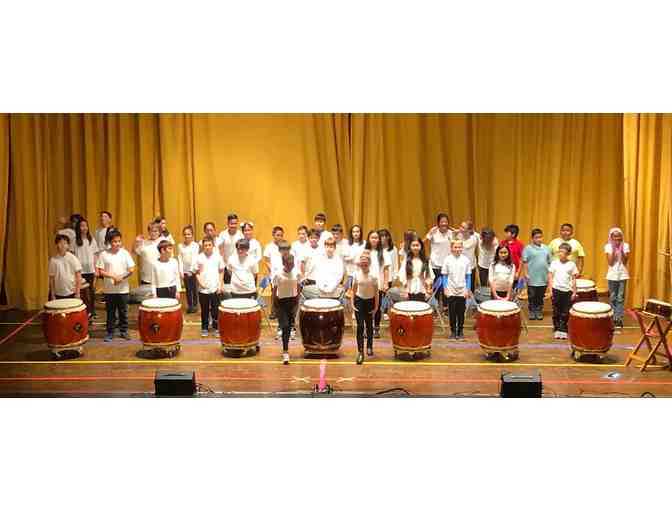
Fund a Need #1: Taiko Classes for all JBBP grades K-5 is $24,000 for one year
- Item Number
- 418
- Estimated Value
- Priceless
- Buy Now Price
- 50 USD
- Quantity Available
- 0
- Sold
- 14 – Purchase History
Item Description
Help give our Kids Taiko Classes
The taiko classes you may have seen performed in the 2019 Gakugeikai Performance are an amazing way to introduce japanese culture, music, art and excersice for all JBBP grades K-5. These classes cost 24,000 for one year and give our children exposure to a rare and beautiful artform.
Please consider a donation of:
$50 (Enter Quanitity=1)
$100 (Enter Quanitity=2)
$500 (Enter Quanitity=10)
$1,000 (Enter Quanitity=20)
In Japanese, taiko literally means "drum," though the term has also come to refer to the art of Japanese drumming, also known as kumi-daiko. Taiko has been a part of the Japanese culture for centuries. Centuries ago, taiko was used predominantly in the military arena. As it evolved, Japanese Buddhist and Shinto religions gradually began to take it on as a sacred instrument. Historically, it has existed in a multitude of other environments, including agrarian, theater, and the imperial court. The art of kumi-daiko, performance as an ensemble, originated post-war in Showa 26 (1951). It was created by Daihachi Oguchi, a jazz drummer who serendipitously stumbled across an old piece of taiko music. Wondering why taiko were never played together, he broke with tradition by forming a taiko drum ensemble. More recently, taiko has enjoyed not only a resurgence of interest in Japan, where there are over 4,000 taiko ensembles, but also transplantation and evolution in North America.
NORTH AMERICAN TAIKO
In this country, taiko has become a rich and varied form of drumming, as idiomatically North American as jazz or American Indian drumming. The first North American Taiko group, the San Francisco Taiko dojo, was created in 1968 by Grandmaster Seiichi Tanaka. San Francisco Taiko Dojo's style was a fusion of Oedo Sukeroku, Osuwa Daiko and Gojinjyo-daiko styles. One year later, Kinnara Taiko of the Senshin Buddhist temple in Los Angeles was founded based on Japanese American Buddhist taiko. San Jose Taiko followed in 1973, with a focus on making taiko a Japanese American art form.
PTCC-JBBP stores data...
Your support matters, so PTCC-JBBP would like to use your information to keep in touch about things that may matter to you. If you choose to hear from PTCC-JBBP, we may contact you in the future about our ongoing efforts.
Your privacy is important to us, so PTCC-JBBP will keep your personal data secure and PTCC-JBBP will not use it for marketing communications which you have not agreed to receive. At any time, you may withdraw consent by emailing Privacy@frontstream.com or by contacting our Privacy Officer. Please see our Privacy Policy found here PrivacyPolicy.
 IRVING PET HOSPITAL
 Mutual Express Company
 Rakuten Insight
 Union Bank
 Japantown Task Force
 Nihonmachi Little Friends
 Arguello Pet Hospital
 The Japanese Pantry
 JCCCNC The Center
 Lee, Youg & Ubaldo Orthodontics
 Japanese Tea Garden
 Green Street Mortuary
 chibi.
 Christ United Presbyterian Church
 Grant T. Tomioka, Esq.
 Kissako Tea
 Clint K. Taura, D.D.S


